6 min read
How I built a 111 kWh home battery system for 35% of retail
Project Snow Moon: one offhand comment from my electrician, eleven Delta Pro Ultras, and a 15-hour drive home from Idaho
- home-infra
- solar
- ecoflow
- snow-moon
“Sometimes the best things in life are unplanned.”
I thought, as I drove back from Boise, white-knuckling the rented F-150 I’d never driven, in a downpour, loaded to the gills with two tons of lithium batteries. Chugging cold brew, wondering how many years it might take them to rebuild the highway if I crashed this bomb I was driving.
Let’s back up. And by back up I mean backup.
This started as a small project. I bought a house in a neighborhood with a lot of trees. Neighbors said trees fall sometimes and hit power lines. Small brownouts, nothing major (usually), but enough. Enough to spark some anxiety as a fully remote worker who needs to be online. A coworker mentioned that he was buying a home battery system, that there was a lucrative solar tax credit, and that piqued my interest.
Down, down, down the rabbit hole we go 🐇.
Started from the bottom
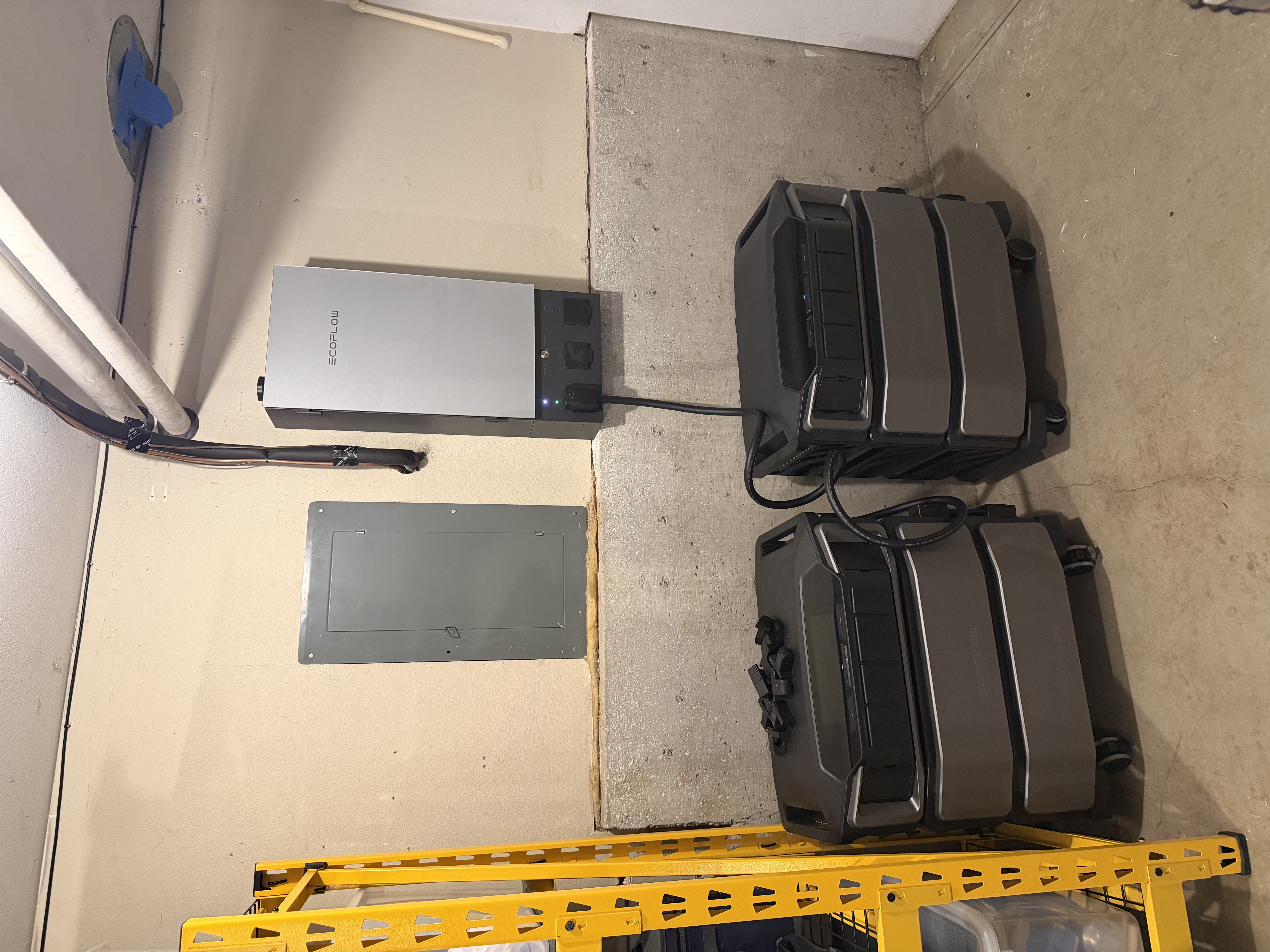
Note: My coworker was building an EG4 system. In hindsight, I wish I’d gone that route. I chose EcoFlow because at the time it was the most popular system, but it’s architected in a way that prevents local access, and it’s all hosted on Chinese servers. They had a classic DST bug that broke the app this past year, and it resulted in a loss of visibility into my system. I was not a fan of this. I try to buy local-first stuff, where cloud access is there but it can function without it. Good examples: Hue, Eufy. Bad examples: Ring, YoLink.
I started with two goals, short and long-term.
Short-term
Short-term goal was an MVP; get the bare necessities backed up, for three days (that was the longest outage I’d heard a neighbor mention). Put the fridge, the HVAC, and the lights on it.
I didn’t know my footprint, so I looked over the power bill and ballparked it. I thought about 12 kWh would do it.
Long-term
Long-term goal was to have a system that backed up everything for a week. My coworker had a winter storm that took out his power for 8 days. I thought that a week would at the very least give me runway to bug out 🙂.
The EcoFlow system I bought only supported 12 circuits, and my panel had 24, so I knew I’d eventually need to add a second one. It wasn’t in budget for the moment.
The install
I hired an EcoFlow-certified installer to add the panel, for the warranty. After he finished the job, he mentioned that he had just finished an install in remote Idaho for a customer who was selling off his EcoFlow system and replacing it with an EG4. I said I was interested.
The Math Mathed
The seller was offloading a massive system—2 panels, 4 inverters, and 19 batteries. I did some math on the capacity I needed and guessed that 11 more batteries would give me a week of backup.
At MSRP, the whole package looks like this:
| Item | MSRP |
|---|---|
| Delta Pro Ultra Battery × 11 | $36,289 |
| Delta Pro Ultra Inverter | $2,799 |
| Smart Home Panel 2 | $2,798 |
| Inverter-to-panel cable | $129 |
| Cabinet dollies | $80 |
| MSRP total | ~$42,095 |
He wanted $15,000 for the bundle. A steal.
That’s about 35% of retail — or about $27,000 in equity vs. buying the same gear new.
Well, shit. Okay.
We’ll find a way to make the budget work for long-term 👍.
The drive
I rented an F-150 and drove to Boise.
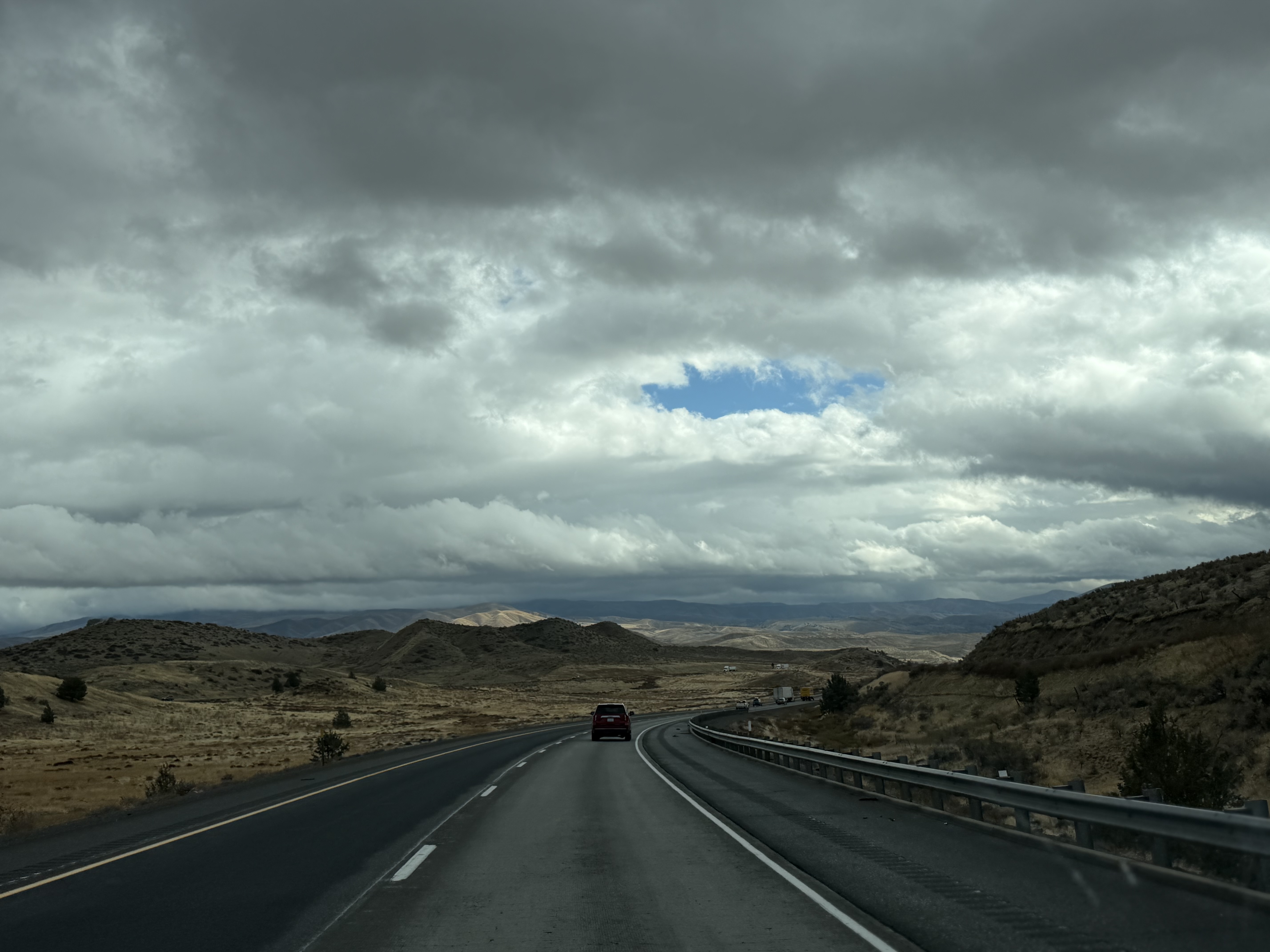
The drive out was deliciously boring. It was settling, as in, the opposite of unsettling. Big sky, broken clouds. Podcasts, audible, music, rinse, repeat. I’d never driven a pickup but it was fine.
The drive back was unsettling. White-knuckling, two tons of explosive lithium-ion batteries packed like sardines in the cab, with about six batteries ratchet-strapped and tarped to the bed. The truck buckled under the weight. And it DUMPED rain. So thick I couldn’t see more than a few hundred feet in front of me. I fishtailed not once, but twice. The irony of dying while transporting a life support system 🤦♂️.
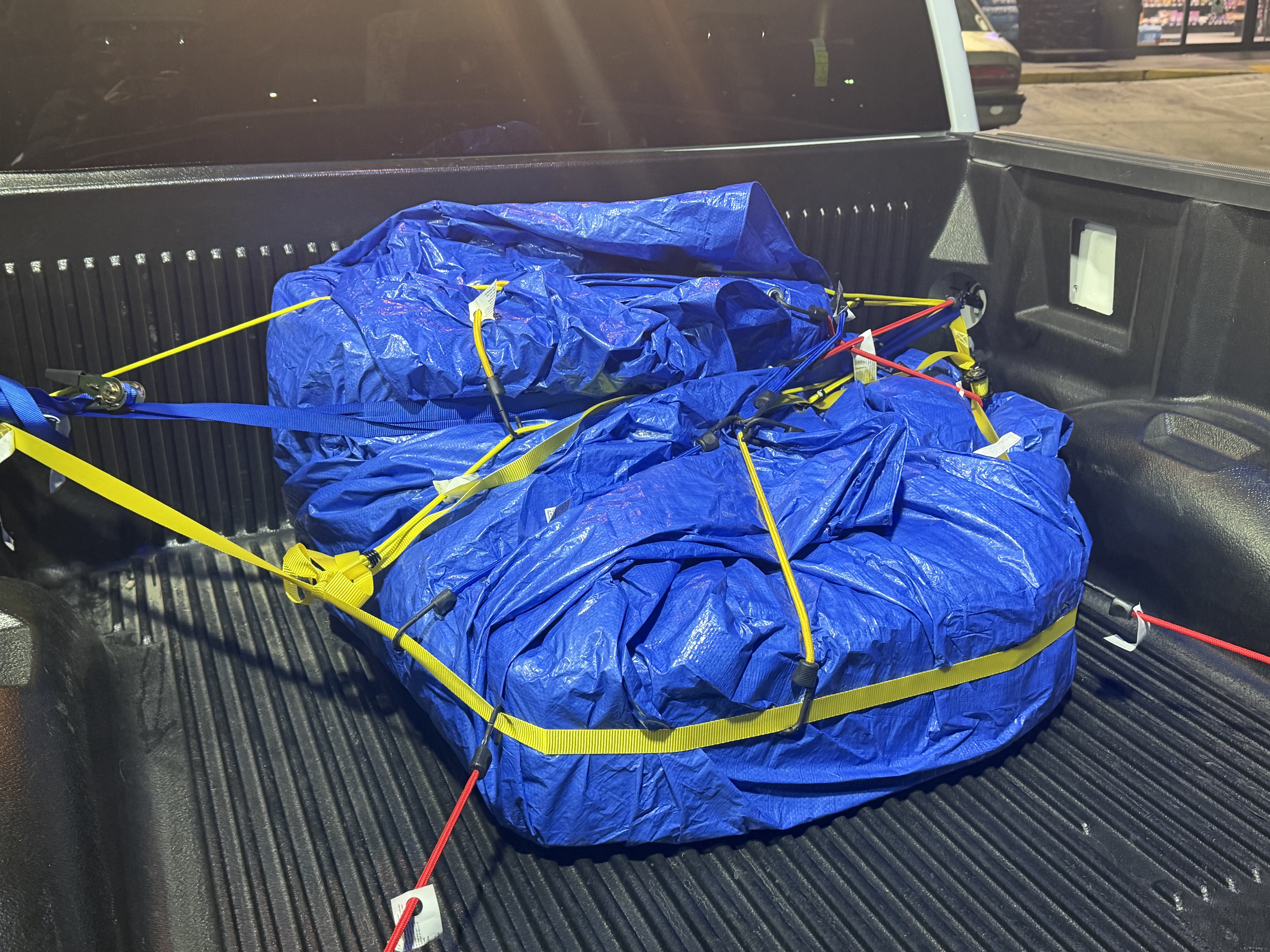
And yet. This too shall pass. Made it.
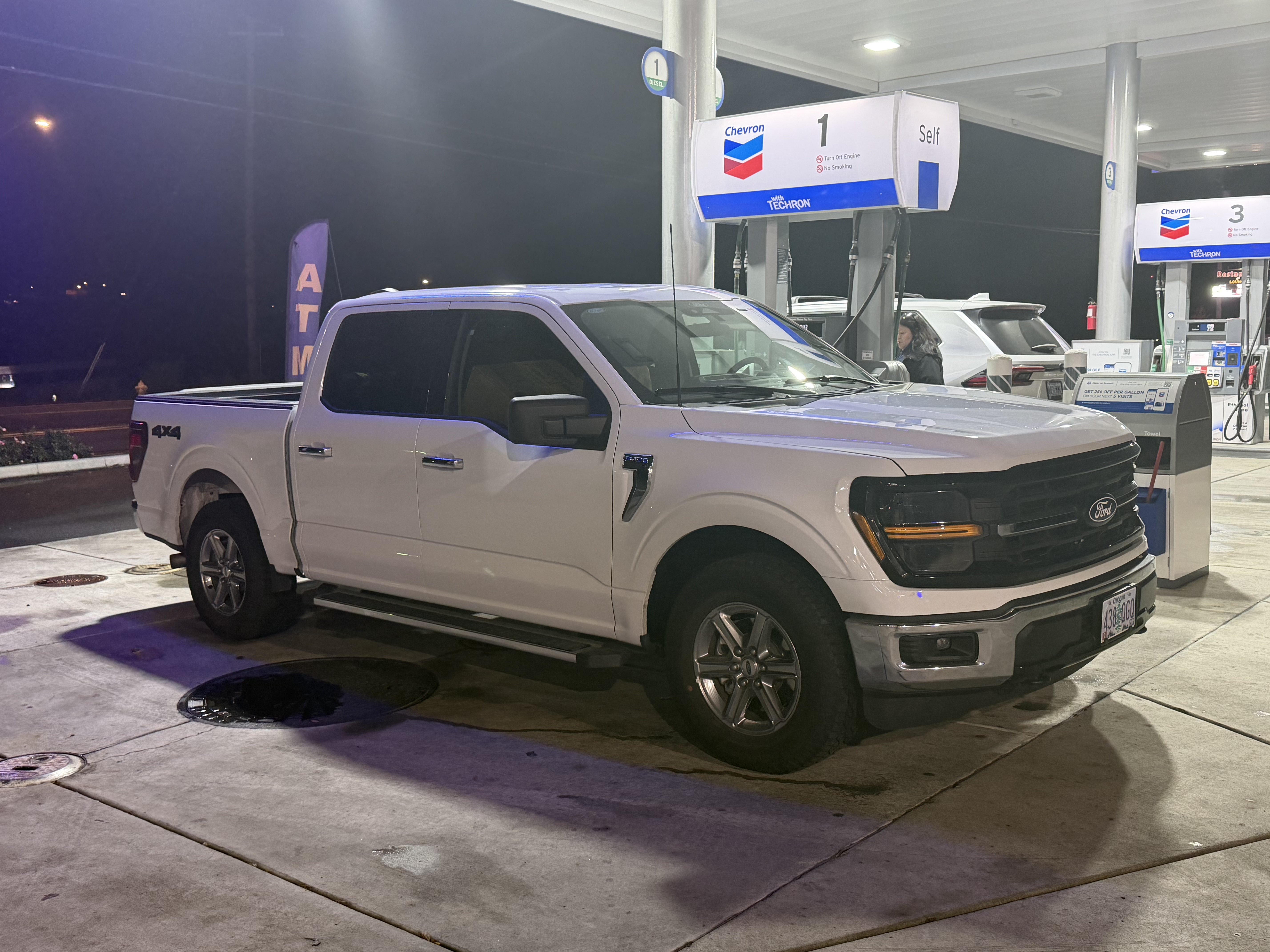
At 1:30 am. Not knowing that the most difficult journey was still ahead. Unloading those batteries, each 150 lbs, most had to be unloaded overhead because there wasn’t room for a ladder in the tight quarters of the garage. My back still hurts thinking about it. I returned the truck to Enterprise around 2:30 am.
Tax Credit! 🎉
Here’s the part that justifies this frivolous purchase.
The federal Residential Clean Energy Credit — the same one most people associate with rooftop solar — covers batteries with 3+ kWh of capacity, whether or not they’re paired with solar at install time. As of the 2022 Inflation Reduction Act, standalone storage qualifies. 30% credit, no limit.
For 2025 I had ~$53,000 in eligible clean-energy improvements at the house (the Idaho deal plus the original Panel-1 install plus a few related pieces). The credit knocked $15,926 off my federal tax bill — enough to nearly zero out my full-year liability and produce a $14,006 refund.
And I didn’t even have solar! It’s crazy! Don’t tell them!
Bad news: the credit expired in 2026, so my 2025 spend caught the last of it. If you’re reading this and shopping for storage now, that 30% is no longer on the table. But talk to your accountant 🙂. Things change.
Naming it “Snow Moon”
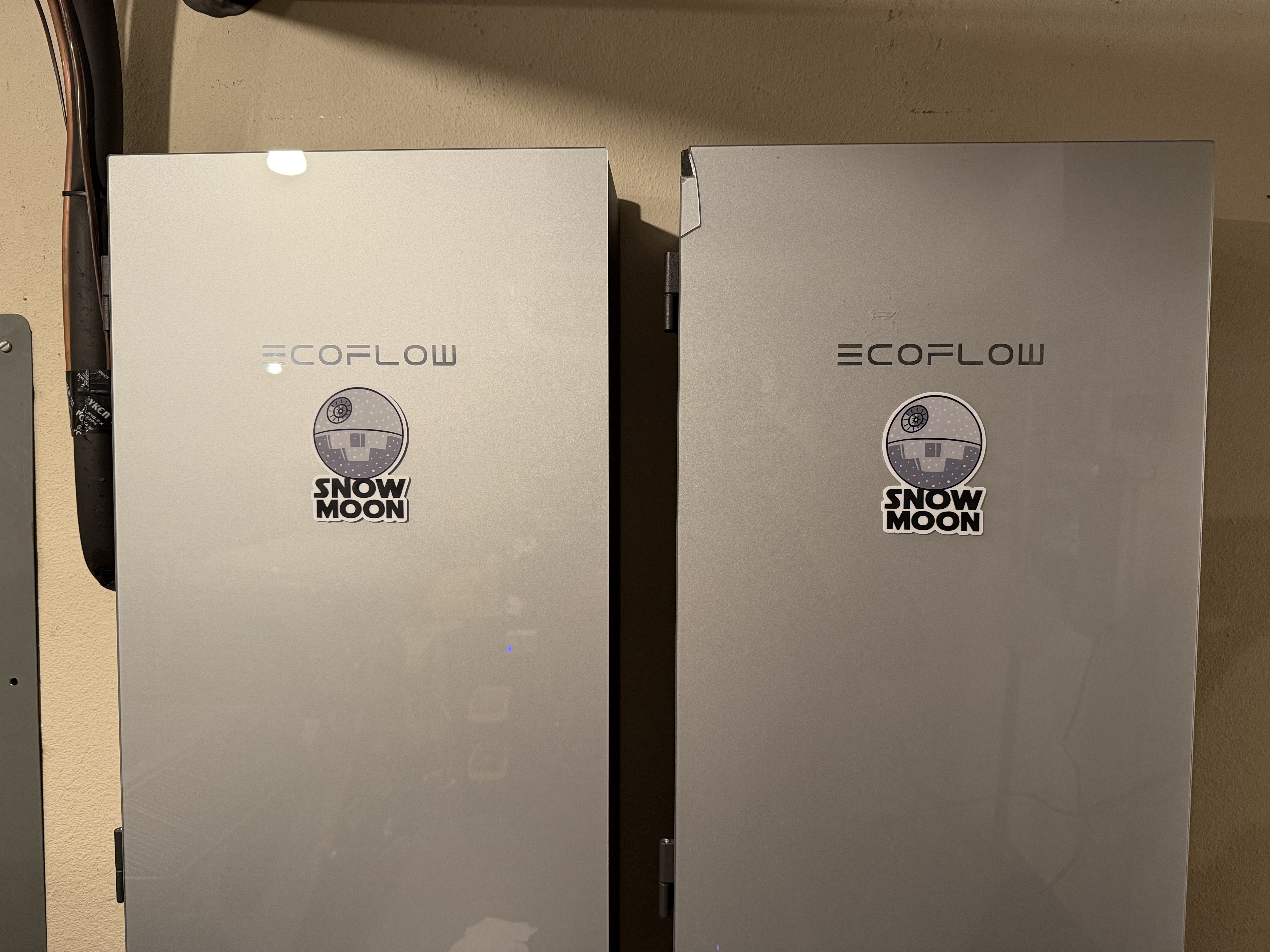
I named the project Snow Moon.
Look at the Smart Home Panel. Blinking lights. Ominous black stack of machines. Shiny screens. It just screams Death Star.
I wanted to name it Death Star. But the Death Star destroys planets. This thing keeps my house warm. It didn’t fit.
What about a moon? 🤔 The system soaks up sun (electricity) all day, and then when the sun stops shining (power outage) it still shines. I heard Obi-Wan in my head:
“That’s no moon.”
Of course. It’s no moon. It’s “Snow Moon.” Quietly powerful, reflected light, a little cold-looking from the outside but a source of warmth on the inside. The joke wrote itself. I generated a playful sticker image with Gemini and ordered stickers for it via Sticker Mule. It was official ❄️🌙.
Now We Here
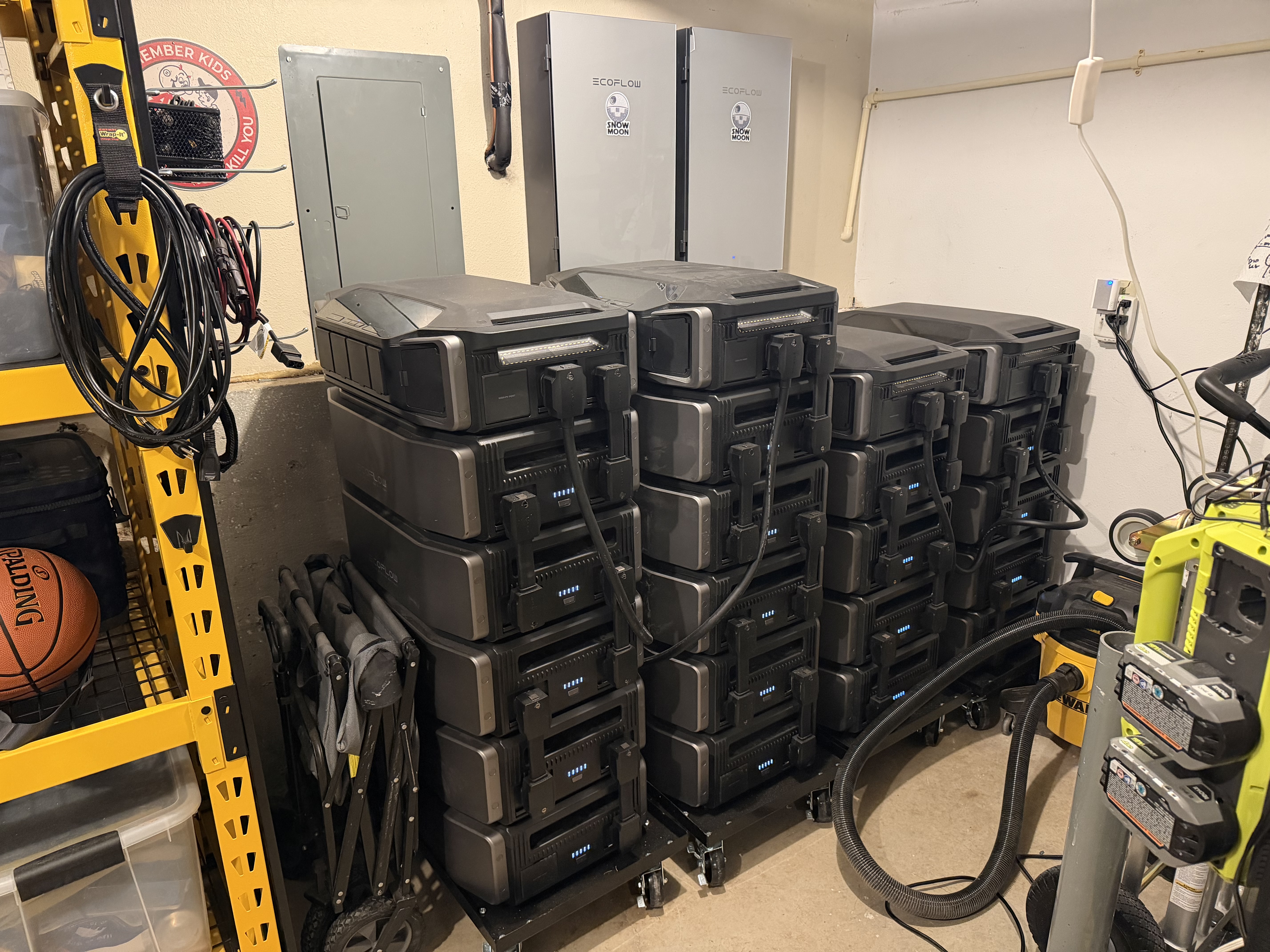
This is where the thing landed: the gargantuan battery cluster in the garage that keeps things humming.
Backup, the original mission
The whole reason this started was the trees. Lines down in storms. A remote job that can’t pause for weather.
When the grid drops, the Smart Home Panels cut the house over to battery in 20 milliseconds. The fridge keeps running, the internet stays up, the furnace blower keeps the heat on. From the inside, you barely notice — except every neighbor’s house going quiet.
With 111 kWh on hand, normal-usage runway is roughly a week before I’d need to start being careful about what’s running. More than a week if I cycle the heat pump intentionally. Days, not hours.
For the first time since I bought this house, an extended outage is something I don’t lose sleep over. Or even notice 💅.
Closing
Was it worth it?
The tax credit reimbursed more than the Idaho purchase price. The truck rental, the gas, and the back pain from a 1:30 am solo unload were their own line items.
But the real return was peace of mind. The house can ride through a multi-day grid outage without skipping a beat. That’s the win.
Sometimes the best things in life are unplanned.